
Best AC Types: How Much Electricity Does AC Use?
AC power use depends on the system, its size, its efficiency, and how long it runs. A small room unit may use far less total energy than a whole-home system, while a zoned system can reduce waste by cooling only occupied zones. Here are the main AC types and who each fits best.
Table of Contents
1. Home Worx Heating and Cooling
Home Worx Heating and Cooling is a local HVAC contractor for homeowners who need the right system, not a guess based on square footage alone.

When we assess AC use, we look at the home's layout, insulation, sun exposure, duct condition, and expected runtime. Those details affect the load far more than a name on a unit label. A system that is too large may cycle on and off often. One that is too small may run for hours without reaching the set point.
That matters in Auburn and Colfax, where summer heat can push a system hard during the afternoon. A home in Grass Valley or Penn Valley may have a different mix of shade, elevation, and night-time cooling. The best answer depends on the building.
We can help compare central air, ductless systems, heat pumps, and repair options. Our team serves Placer and Nevada counties, with installation, maintenance, air-quality work, and emergency repair. If you're also weighing a heat pump, our guide to how much electricity a heat pump uses can help you compare cooling and heating demand.
The limitation is simple: no contractor can predict your bill from AC type alone. Your utility rate and daily runtime still control the final number. For a home in Rocklin, Roseville, or Lincoln, a load check is a better starting point than copying a neighbor's system size.
2. Cooling Systems With Higher Peak Demand
A multi-room cooling approach is the best fit for homeowners who want one thermostat to cool the whole house. It can use more electricity in total because it conditions many rooms at once and must move air through ductwork.
Multi-room systems are usually rated by cooling capacity in BTUs and efficiency through SEER2. BTUs describe cooling output. Watts describe electrical input. A larger BTU rating does not automatically mean a higher bill, but a larger system usually has a larger motor and compressor.
To estimate use, start with the unit's input power on its data plate. Convert watts to kilowatts by dividing by 1,000. Then multiply by the hours the compressor actually runs. If a unit draws 3 kW while operating for six hours each day, the simple estimate is 18 kWh per day. Your actual cost depends on your electricity rate.
That example assumes full-power operation for all six hours. Real systems cycle. Inverter equipment can also slow down after the home reaches the target temperature. The bill may be lower or higher based on weather, duct leaks, thermostat settings, and indoor heat from people or appliances.
Regular filter care and attention to airflow can help manage electricity use because a restricted system has to work harder. We also look at return vents and supply ducts during service visits. A clean outdoor coil cannot make up for poor airflow inside the home.
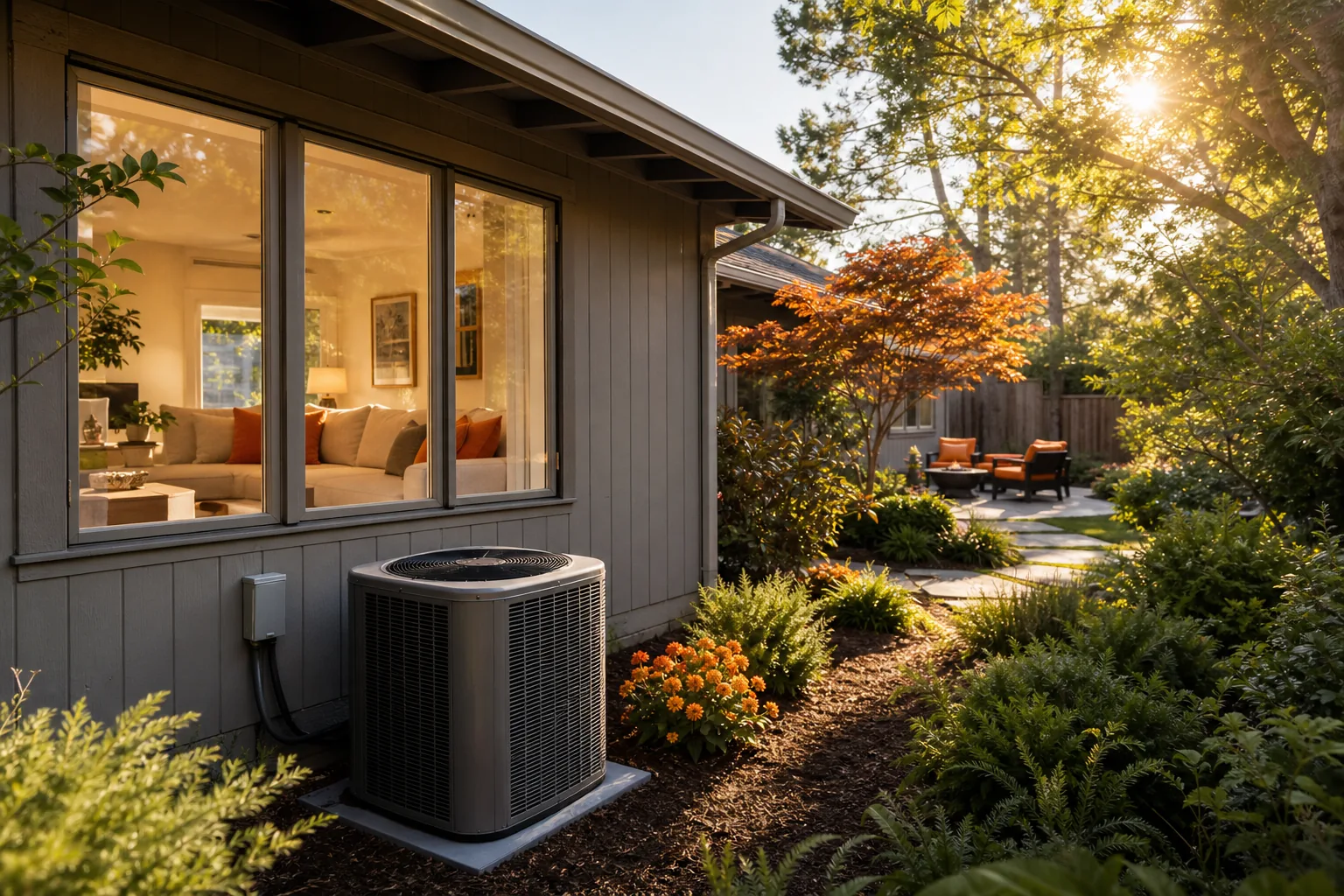
Multi-room cooling is often the right choice when several rooms need cooling at the same time. It is less attractive when you only use one bedroom or an addition. In that case, another cooling approach may use less total energy.
In the hot, dry summers and cold winters of Auburn, Colfax, Rocklin, Roseville, Grass Valley, Penn Valley, and Lincoln, filter care and attention to airflow can help manage electricity use.
Contact Home Worx Heating and Cooling for local cooling service.
3. Single-Room Cooling, Lower Total Load for One Room
Single-room cooling is best for one room, a small apartment, or a home where whole-house cooling is not needed. Its total electricity use can stay low because the equipment cools a limited area.
The equipment's label normally lists volts, amps, watts, or an energy rating. If it lists amps and volts, multiply them to estimate watts. For example, a 115-volt unit drawing 8 amps has an input of about 920 watts, or 0.92 kW. At eight hours of operation, the simple estimate is 7.36 kWh for that day.
That does not mean the compressor runs at full draw every minute. The thermostat shuts the compressor off after the room reaches its set point. A shaded bedroom with a closed door may need much less runtime than a sunny living room with a poor seal around the opening.
Single-room cooling also makes zoning easy. You can cool the room you use while leaving empty rooms alone. That may work well for a guest room in Roseville, a home office in Lincoln, or rooms in Auburn, Colfax, Rocklin, Grass Valley, and Penn Valley. The tradeoff is comfort across the rest of the house. Noise, blocked views, security, and limited cooling reach can also be issues.
Keep the filter clean and check the side panels for air gaps. Hot outdoor air entering around the frame forces longer cycles. The same rule applies to any AC: the machine cannot overcome a building that leaks heat all day.
Single-room cooling is usually a poor match for a large open floor plan. It may run almost constantly without cooling distant rooms. For a room-by-room decision, compare the equipment's rated input with your expected hours, then use your electric rate in the formula.
For local guidance in Northern California foothill homes, contact Home Worx Heating and Cooling.
4. Temporary Room Cooling, With Efficiency Tradeoffs
Temporary room-cooling equipment can help when you need cooling without a permanent installation. You can move it between rooms, but that flexibility may come with higher runtime and less effective cooling than a properly sized fixed unit.
This type of equipment sends warm air outside through a hose. The hose must connect to a window panel, and the panel must seal well. If hot air leaks back into the room, the compressor runs longer. Single-hose designs may also pull replacement air from the room or nearby gaps, which can increase heat gain.
Use the same calculation as other AC types. If the label shows 1.2 kW and the unit runs for five hours, it uses about 6 kWh. Your result depends on the actual input rating and whether the compressor cycles.
Temporary room cooling can make sense in a rental, a workshop, or a room that needs short-term cooling. It may also help during a repair while a permanent system is offline. But moving the equipment does not remove the need for correct sizing. Equipment that is too small will run for long periods. Equipment that is too large may cool the air before it removes enough moisture.
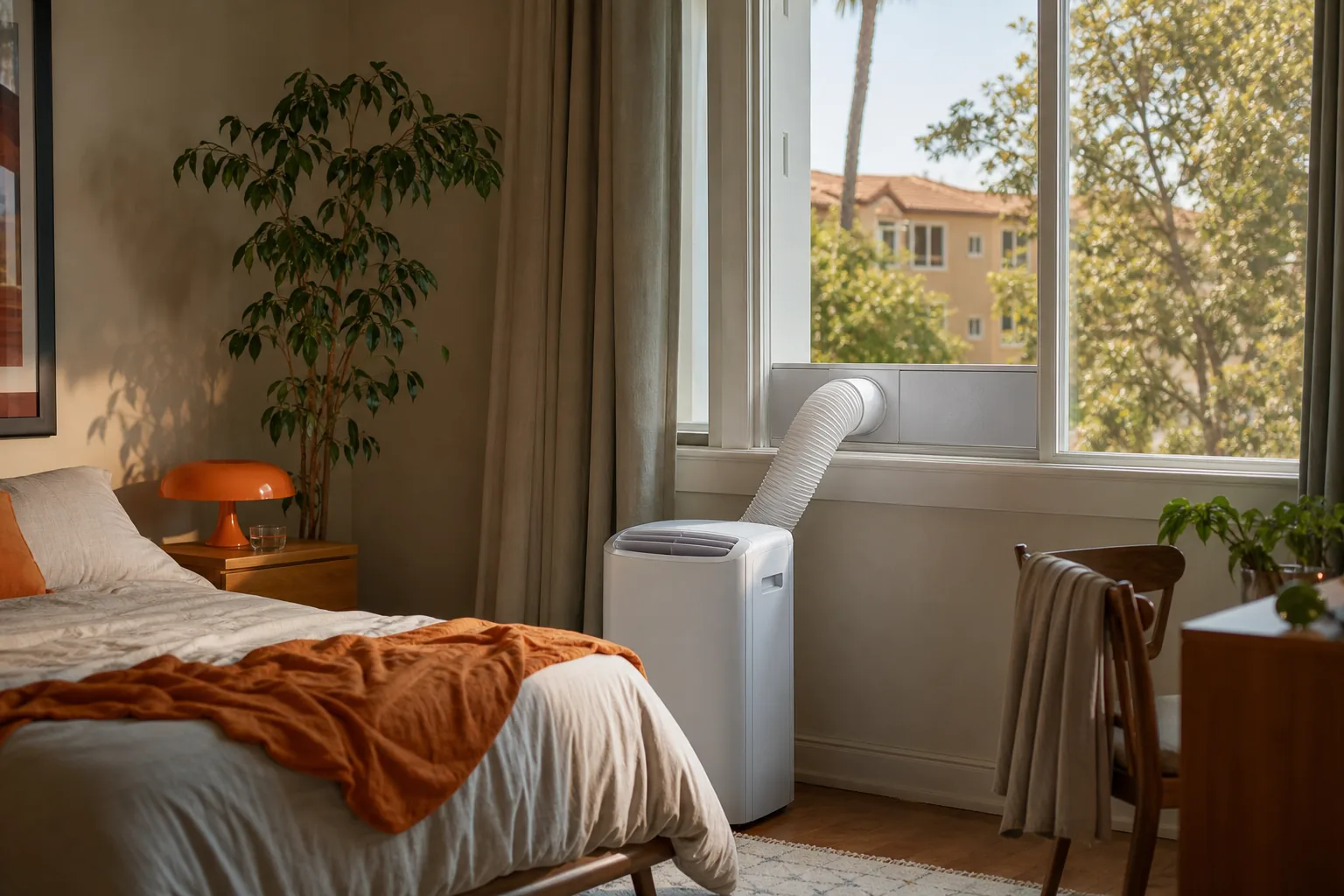
Check the condensate instructions before buying. Some systems collect water that must be drained, while others exhaust much of the moisture with the warm air. Noise can also matter if the equipment runs beside a bed or desk.
In the hot, dry summers of Auburn, Colfax, Rocklin, and Roseville, consider access and short-term control when choosing room cooling. Homeowners in Grass Valley, Penn Valley, and Lincoln may also prefer a fixed system when they need quiet, steady cooling across several rooms.
For local guidance, contact Home Worx Heating and Cooling for service in Auburn, Colfax, Rocklin, Roseville, Grass Valley, Penn Valley, and Lincoln.
5. Targeted Cooling Systems for Efficient Zoning
A targeted cooling system is a strong choice for additions, older homes without ducts, or rooms that stay warmer than the rest of the house. It uses an indoor air handler connected to an outdoor compressor.
Many targeted cooling systems use inverter compressors. Instead of switching between full power and off, the compressor can slow down as the room reaches the target temperature. That can lower average power use, though the savings depend on sizing, settings, weather, and the unit's rating.
The table below uses general estimates from manufacturer and industry guidance. Actual input varies by model and outdoor conditions. Always check the equipment data sheet before sizing a circuit or estimating a bill.
System size | General input estimate | Good fit | Main watchout |
Small system | 500 to 750 watts | Small room or studio | May struggle in a large, sunny room |
Medium system | Check equipment data sheet | Bedroom or average living room | Needs correct sizing for long runtimes |
Large system | Check equipment data sheet | Large room or open plan | Oversizing can hurt comfort |
Larger system | Check equipment data sheet | Large zone or connected rooms | May need a 230-volt circuit |
For example, a unit drawing 1 kW for eight hours would use 8 kWh. Electricity rates vary by utility plan and location. Once the room reaches its set point, an inverter system may draw less than its rated input.
A higher SEER2 rating generally means less electricity for the same cooling output. Our explanation of what SEER rating means for HVAC energy use covers the label in plain terms. Seasonal efficiency ratings compare cooling output with electrical energy over a season; see the seasonal energy-efficiency ratio reference for background.
Targeted cooling systems reduce duct losses because they deliver air close to the room being cooled. Zoning is the bigger day-to-day gain. You can cool an occupied office without conditioning unused bedrooms.
They are not perfect for every home. Indoor heads remain visible, filters need care, and a multi-zone design needs thoughtful placement. In Colfax, Grass Valley, Penn Valley, Auburn, and Rocklin, we also consider winter heating needs before recommending a cooling-only setup.
If installation is the next step, our guide to how a targeted cooling system works explains the parts and common home layouts. A site review is still needed before choosing capacity. Homeowners in Roseville and Lincoln can contact Home Worx Heating and Cooling for local service.
FAQ
How much electricity does AC use per hour?
AC use per hour equals the system's running power in kilowatts. A unit drawing 1 kW uses about 1 kWh for each hour the compressor runs. Multiply that energy by your electric rate. The result changes with cycling, outdoor heat, insulation, thermostat settings, and the size of the space.
Does a higher SEER mean lower bills?
A higher SEER2 rating usually means lower electricity use for the same cooling output. It does not guarantee a lower bill because runtime still matters. A high-efficiency system that cools a poorly sealed home may run often. Compare efficiency ratings only after the system is correctly sized.
Which AC type uses the least electricity?
The lowest total use depends on what you need to cool. A room-focused cooling option may use the least energy for one room. A zoned system can be more efficient for a specific area or addition. A whole-home system may use more total electricity because it cools the entire home, though a newer high-efficiency system can reduce that gap.
Does AC use more electricity on very hot days?
Yes, AC usually uses more electricity during very hot weather because the compressor runs longer. Direct sun, poor insulation, dirty filters, and open doors add to the load. In Auburn, Rocklin, and Roseville, afternoon heat can produce much longer cycles than a cool evening. Colfax, Grass Valley, Penn Valley, and Lincoln homes can see similar increases during hot weather.
How can I reduce my AC electricity use?
Set the thermostat at a reasonable temperature, replace or clean the filter as directed, and keep doors and windows closed while cooling. Seal obvious duct or window leaks. Use zoning when possible. If the system runs nearly nonstop or struggles to cool, have Home Worx Heating and Cooling check airflow and sizing.
For local guidance in Northern California foothill communities, contact Home Worx Heating and Cooling for service.
Conclusion
For one room, start with a correctly sized window unit. For whole-home comfort, compare central air with a ductless design based on your layout and usage pattern. If you're in Auburn, Colfax, Rocklin, Roseville, Grass Valley, Penn Valley, or Lincoln, contact Home Worx Heating and Cooling for a local load check and a clear estimate of expected electricity use.