
Heat Pump Tax Credit California: 2026 Guide
The $2,000 federal heat pump credit is gone for new installations, and some of California’s biggest rebates are already reserved. You can still check utility incentives and future state funding, but confirm the rules before you sign or count on a discount.
Use these five steps to check what may apply, plan the project cost, and keep the records you’ll need. We serve homeowners across Placer and Nevada counties and can help review your project locally.
We analyzed 6 California heat pump incentive programs (HEEHRA single-family, TECH Clean California, HOMES, PG&E, SMUD and SDG&E) on official program pages in October 2026 and found 3 of the 6 closed to new applicants or not yet launched. The other 3, PG&E, SMUD and SDG&E, still offered rebates of $800 to $4,000.
Table of Contents
Step 1: Check Whether a Federal Heat Pump Tax Credit Applies in 2026
For a new heat pump installed in 2026, the federal heat pump tax credit doesn’t apply. The credit had covered up to 30% of qualifying costs, capped at $2,000 for a heat pump, but it expired for equipment placed in service after December 31, 2025.
“Placed in service” means the system was installed and ready to run. A signed contract, equipment order, or deposit alone didn’t meet that deadline. If your unit was working by the cutoff, you may still be able to claim the credit on the return for the year it was placed in service. Ask a tax professional about your own filing.
For eligible past installations, the IRS instructions for claiming the home improvement credit explain how to claim it for the year the property was placed in service. Keep the invoice and installation records in case you need to support your claim.
Don’t budget a 2026 project around the old credit. California rebates are separate programs, with their own funds, deadlines, and rules. Our California HVAC rebate overview gives homeowners another place to check how state and utility incentives differ.
One more tax detail: the federal home improvement credit and the Residential Clean Energy Credit, Section 25D, aren’t the same credit. Don’t assume a heat pump qualifies under a different federal credit simply because it uses electricity. A tax professional can check whether your project has any tax benefit that applies under current rules.
Key Takeaway:Treat the expired federal credit as unavailable for a new 2026 installation, and verify any other tax claim before including it in your budget.
For local service, contact Home Worx Heating and Cooling , serving Auburn, Colfax, Rocklin, Roseville, Grass Valley, Penn Valley and Lincoln.

Step 2: Check California Heat Pump Rebates and Current Funding
California’s largest advertised heat pump rebates may not be open to new applicants. Check a program’s live status before treating a dollar amount as a discount. HEEHRA’s listed caps remain useful for understanding what the program was designed to cover, but the single-family funds are fully reserved.
HEEHRA Phase I offered up to $8,000 for eligible low-income single-family households and up to $4,000 for eligible moderate-income households. Multifamily rebates could reach $14,000 per unit, subject to income and project rules. Single-family reservations filled by February 24, 2026; multifamily reservations filled by September 1, 2026. Those caps don’t mean new funding is available now.
TECH Clean California listed incentives of $1,000 to $1,500 for market-rate customers and $3,500 to $4,000 for equity-rate customers. But the program closed to new sales on November 14, 2025. Those figures may apply to existing reservations, not a new project. Ask whether funding has reopened before using them in an estimate.
Check the residential energy rebate program page for state rebate program updates.
Use this table to sort the programs before you make calls. It’s a status check, not a promise of payment.
Program | Published amount | What to verify first |
HEEHRA single-family | Up to $8,000 low-income; up to $4,000 moderate-income | Funds are reserved; ask about waitlist status |
HEEHRA multifamily | Up to $14,000 per unit | Reservations are full; check for new funding or existing reservation rules |
TECH Clean California | $1,000 to $1,500 market-rate; $3,500 to $4,000 equity-rate | Closed to new sales; verify any active reservation |
Utility incentive | Varies by utility and program | Check your service address, equipment rules, and current funding |
HOMES | Launch status varies | Check the state program page for launch status |
Income rules can depend on area median income, household details, and the program. A stated income range isn’t proof of eligibility. Start with the address and household information the program requests, then ask whether applications or reservations are still being accepted.
For a step-by-step look at forms and eligibility checks, use our heat pump rebate application guide . The key is to confirm both the rule and the open funding before you schedule work. Contact Home Worx Heating and Cooling for local service in Placer and Nevada counties.
Step 3: Confirm the Heat Pump, Installer, and Permit Requirements Before Signing
Before you approve an estimate, confirm that the exact heat pump model and installation plan meet the program’s rules. Rebates can depend on the equipment, the installer, and the application timing. A general claim that a system is “high efficiency” isn’t enough to prove it qualifies.
Ask for the model number and its equipment certificate or specification sheet. Some programs require ENERGY STAR certification; HEEHRA’s listed requirements include two-speed or variable-speed ENERGY STAR certified heat pumps for heating and cooling. Other incentives may set their own efficiency levels. Check the exact program list rather than relying on a similar model’s rating.
Next, ask whether the contractor meets the program’s participation rules. Some rebates require an installer registered with that specific program, in addition to any state contractor licensing requirements. Get the details in writing and verify them with the program before work begins. A contractor may be qualified to install equipment but not enrolled in every rebate program.
Check the permit plan with your local building department. Permit needs can depend on the scope of work and local rules, especially if the project changes electrical service or ductwork. Don’t skip a permit to save time. A program may ask for final inspection records, and missing paperwork can hold up or block a rebate.
Ask these questions before you sign:
What is the exact make and model, and where can I check its eligibility?
Does the program require pre-approval before installation?
Is the installer registered for this incentive?
Which permits and final sign-offs will the project need?
Who will submit each form, and when?
In Rocklin or Roseville, as in other local communities, check the rules for the project address. A permit timeline or utility territory can differ even between nearby homes. At Home Worx Heating and Cooling, we can inspect the system and discuss the proposed installation before you decide what to do.
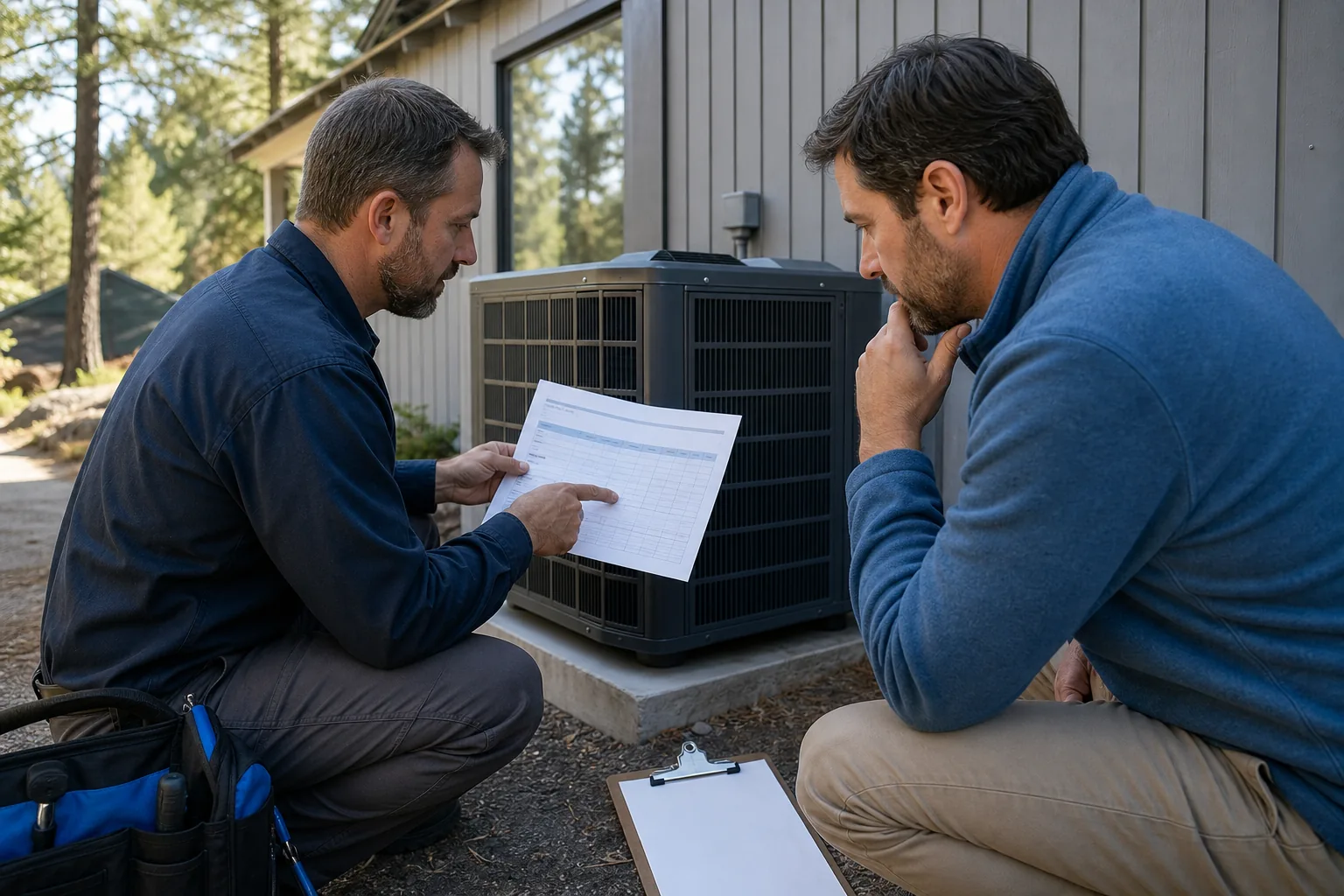
Pro Tip:Get rebate pre-approval before installation when the program requires it. Don’t assume a program will accept an application after the work is done.
Step 4: Calculate the Project Cost After Eligible Rebates
Build your project budget from the written quote, then subtract only incentives you’ve confirmed are available to you. The old federal credit doesn’t lower the cost of a new 2026 installation. A state rebate that is fully reserved shouldn’t lower it either.
Ask for a quote that shows the equipment and installation costs separately. Note any work that may affect the total, such as duct changes or electrical updates. That breakdown helps you compare estimates and match costs to program forms, which may ask for specific details.
Then make two totals:
Confirmed net cost:quoted project cost minus incentives you’ve been approved to receive.
Possible net cost:quoted project cost minus incentives that may open later, clearly marked as uncertain.
Keep those figures separate. If a program has a waitlist, don’t treat a place on it as approval. The same goes for a rebate that has a published amount but is closed to new reservations. If the funds open later, you can update your estimate then.
Also ask when each incentive is paid. Some programs reduce the invoice, while others may pay after the work and paperwork are approved. That timing affects how much you need available upfront, even if you may qualify for a rebate later.
For example, if a homeowner in Grass Valley has a quote and sees an advertised HEEHRA cap, the cap alone isn’t a confirmed saving. First check whether the household qualifies. Then check whether the program can accept a reservation. Only subtract the rebate from the confirmed total if both checks come back positive.
Funding can change while you’re planning. Home Worx Heating and Cooling can review your home and discuss the installation scope, but incentive approval comes from the program administrator. Ask for any estimated rebate to be labeled clearly so you can see what you’ll owe if it doesn’t come through.
If the upfront cost is a concern, ask about our financing options and our 10% discount for seniors and veterans. Compare the full repayment cost with the project budget. A rebate that might reopen is not a substitute for knowing what the payments would be without it.
Step 5: Save the Records and Complete Any Required Applications
Keep one folder for the project, both on paper and as digital copies. Save the signed quote, final itemized invoice, proof of payment, equipment specifications, permit documents, and any program approval. These records help you finish rebate applications and answer questions later.
Before installation, write down each program’s required steps and deadline. Some incentives require an application before work starts; others ask for documents after inspection. Follow the specific program’s instructions. Don’t rely on a neighbor’s timeline or an old checklist, since program rules and funding can change.
After the work, compare the installed model number with the one on the approved application. Save the permit sign-off and any inspection record. If the final system differs from the proposed equipment, ask the program administrator whether you need to update your application.
For a utility program, check which account holder and service address must appear on the form. A renter may need the property owner’s approval. A landlord should check whether the program accepts applications for that property type. These details can affect who files and what documents are needed.
For a past federal claim, the IRS recommends keeping purchase receipts and installation records. The IRS says documentation may be needed if a return is audited, even when you don’t attach those records to the return. Use the rules for the tax year when the equipment was placed in service, and ask a tax preparer if you’re unsure.
Utility incentives may have their own application process. Check the current program terms for your service address; eligibility and coverage can vary by utility.
In Penn Valley or Lincoln, first identify the utility serving your address, then check its current incentive page. Keep a note of the date you checked and the program contact or confirmation number, if one is provided. That simple record can help if the rules change before your application is complete.
For local HVAC service, contact Home Worx Heating and Cooling.
FAQ: Heat Pump Tax Credits and Rebates in California
Is there a federal heat pump tax credit in California for 2026?
No, a new heat pump installation placed in service in 2026 doesn’t qualify for the expired federal heat pump tax credit. That credit had offered up to 30% of eligible costs, with a $2,000 heat pump cap. If your system was installed and ready to run by the end of 2025, ask a tax professional whether you can claim it for that earlier tax year.
Can I still get a California heat pump rebate?
Possibly, but check the funding status for your address and project before counting on a payment. HEEHRA single-family and multifamily reservations are full, and TECH Clean California closed to new sales. Utility programs may have separate rules or funds. A published rebate amount doesn’t mean the program is accepting new applications.
How much can HEEHRA pay for a heat pump?
HEEHRA listed up to $8,000 for eligible low-income single-family households and up to $4,000 for eligible moderate-income households. Multifamily rebates could reach $14,000 per unit, depending on income and project costs. These are program caps, not guaranteed payments, and current reservations are full. Check official program updates before making a project plan.
Can I combine a utility rebate with a state rebate?
Some incentives may be combined, but you need to confirm the rules for each program. Check whether both funds are open, whether the equipment qualifies for both, and whether one rebate changes the eligible costs for another. Keep each approval and payment record. Don’t assume two advertised incentives can be stacked for your address.
What paperwork should I keep for a heat pump rebate?
Keep the itemized quote and final invoice, proof of payment, exact equipment model and specification sheet, permit records, and any pre-approval or rebate confirmation. A program may request other documents, such as utility account or income information. Follow its current checklist and save a copy of every submitted form.
Conclusion
Check program status before you choose equipment or sign an installation contract. For local help reviewing your home and project scope, contact Home Worx Heating and Cooling in Colfax. You can also compare the system choices in our heat pump versus air conditioner guide before planning your next step.