
What Is an HSPF Rating? Heat Pump Efficiency Explained
What is an HSPF rating, and what can it tell you about your heating bill? HSPF measures how much heat a heat pump delivers for the electricity it uses over a standard heating season. The rating helps compare equipment, but your home, climate, and installation affect the results you’ll see.
We analyzed 284,895 certified system listings in the ENERGY STAR Air-Source Heat Pump database (data.energystar.gov) and found HSPF2 ratings span from 7.20 to 17.50, over double between the lowest and highest qualifying systems. The average listed system rates 8.55 HSPF2, just above the 7.80 minimum required to qualify.
Table of Contents
What an HSPF Rating Measures
HSPF stands for Heating Seasonal Performance Factor. It measures a heat pump’s seasonal heating output in British thermal units, or BTUs, divided by its electricity use in watt-hours. In plain terms, it shows how much heat the system delivers for each unit of electricity it uses across a standard heating season.
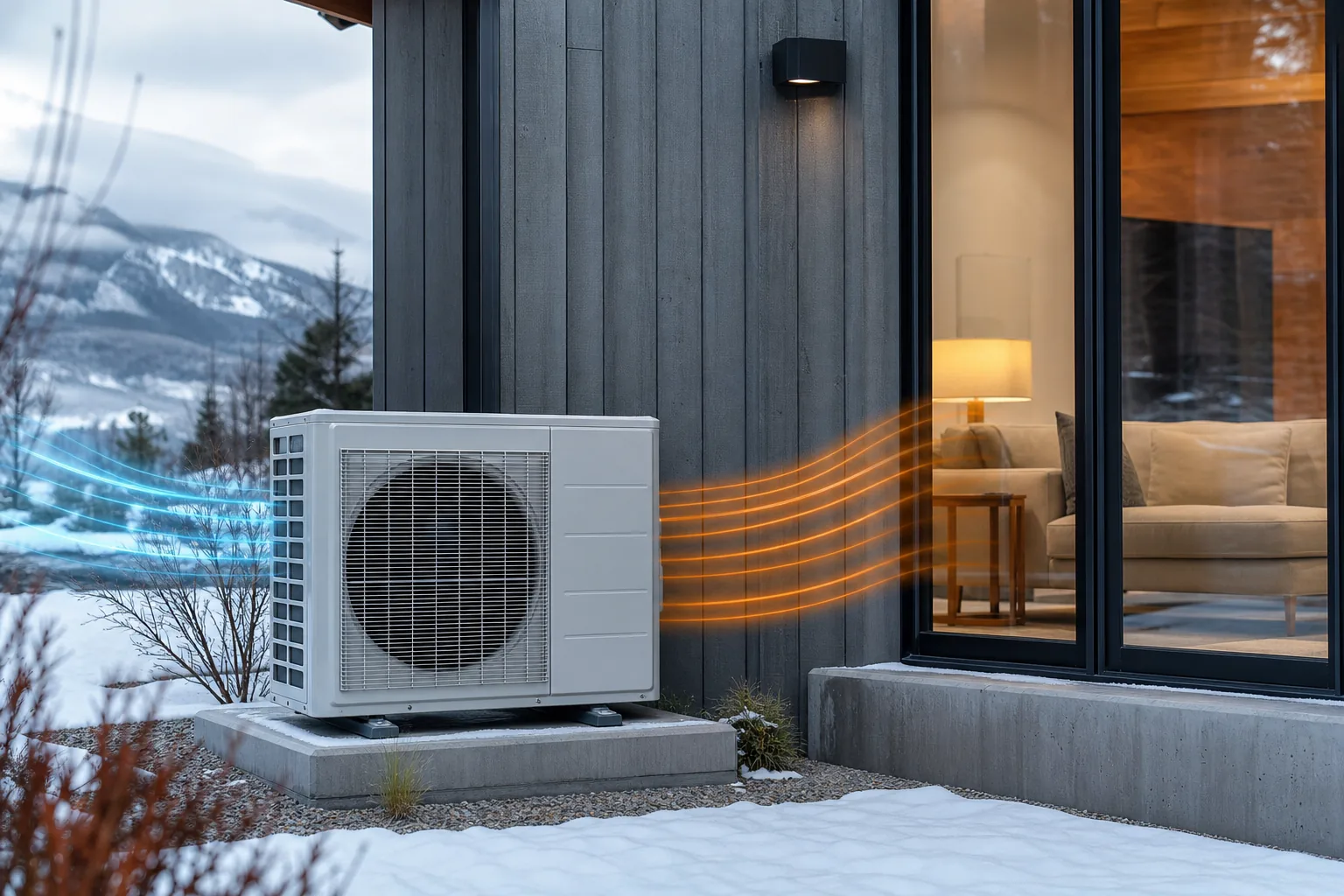
A higher HSPF means more heating output per watt-hour under the test method. It doesn’t mean the system makes heat from nothing. A heat pump moves heat from outdoor air into your home, rather than creating heat directly.
For a simple example, a heat pump rated at 10 HSPF delivers 10 BTUs of seasonal heating for each watt-hour used, as represented by the rating. That arithmetic explains the ratio. It isn’t a prediction of your home’s bill.
HSPF is the heating measure. SEER, or the newer SEER2, measures seasonal cooling efficiency. A heat pump does both jobs, so compare its heating rating as well as its cooling rating. Our guide to what a SEER rating means explains the cooling side.
Think of HSPF as a seasonal score, not a promise that one model will use a fixed amount less electricity in every house. It helps make an initial comparison between systems tested on the same basis. It can’t account for every detail of your home or the weather you’ll get. For homeowners in Auburn and Colfax, Rocklin and Roseville, or Grass Valley, Penn Valley and Lincoln, local winter conditions and home characteristics also matter.
Key Takeaway:HSPF compares seasonal heating delivered with electricity consumed. A higher rating indicates greater efficiency under the test conditions.
For local service, contact Home Worx Heating and Cooling .
How HSPF and HSPF2 Ratings Are Determined
HSPF comes from standardized tests, not a measurement taken in your house. Testing estimates how a heat pump performs across a heating season with different outdoor temperatures and operating conditions. Results are combined to produce one seasonal rating.
The newer HSPF2 uses updated test conditions. One change is greater resistance to airflow during testing, which better reflects the work a system faces as air moves through ducts. The equipment didn’t suddenly get less efficient. The test changed, so HSPF and HSPF2 numbers aren’t direct, one-to-one comparisons.
HSPF2 gives buyers an updated basis for judging seasonal heating performance. When comparing current systems, put HSPF2 beside HSPF2. If you’re looking at an older model with an HSPF number, don’t assume its rating beats a newer system just because the number looks larger.
A product-page number alone may not describe every possible system pairing, so check the exact model combination in a proposal.
Real operating conditions can differ from the standard test. Outdoor temperature changes how hard a heat pump works. Duct leaks or restricted airflow can affect how well heat reaches the rooms. Poor sizing can lead to frequent cycling or long run times, while weak insulation increases the home’s heating demand.
Variable-speed equipment can adjust its output rather than run only at one fixed level. That may help it meet changing demand, but the system’s published rating still depends on the tested model combination. Refrigerant type by itself doesn’t tell you the HSPF2 rating; look at the rating for the complete matched system.
Home Worx Heating and Cooling can review proposed equipment for homes in Rocklin, Roseville, Auburn, Colfax, Grass Valley, Penn Valley and Lincoln. Contact Home Worx Heating and Cooling for local service and guidance on how a system fits your home.
What a Higher HSPF Rating Means for Energy Use
If two heat pumps deliver the same amount of seasonal heat, the one with the higher HSPF rating is expected to use less electricity under the rating’s test assumptions. The difference can matter more in a home that relies on the heat pump through a long heating season than in one that uses it only now and then.
Here’s a comparison using the HSPF formula: for the same seasonal heat output, a system rated at 10 HSPF uses less electricity than one rated at 8 HSPF. This simplified comparison doesn’t say how much money a household will save, because electricity rates and actual heat demand vary.
Your bill also depends on thermostat settings, outdoor temperatures, home size, insulation, and duct condition. If the ducts lose heat before it reaches living spaces, a high-rated unit can’t erase that loss. Nor does a seasonal rating tell you exactly how the unit will perform on the coldest night of the year.
In foothill communities such as Grass Valley, Penn Valley, Auburn, Colfax, Rocklin, Roseville and Lincoln, homeowners may see hot, dry summers alongside cold winter periods. That makes it sensible to consider both sides of a heat pump’s work: HSPF2 for heating and SEER2 for cooling. Ask an installer to explain how the proposed system’s ratings relate to your home’s heating and cooling needs.
For an estimate of how electricity use relates to a home’s heat pump and annual heating demand, our page on how much electricity a heat pump uses covers the factors that shape usage.
A dual-fuel setup adds another choice: a heat pump handles some conditions, while a furnace can take over when the controls call for it. The heat pump’s HSPF2 rating still describes its seasonal test result. It doesn’t describe the energy use of the whole dual-fuel system or tell you when the furnace will run.
Pro Tip:Ask for the exact matched-system HSPF2 rating, then have the installer explain what the system will do when outdoor temperatures fall.
How to Read an HSPF Rating When Comparing Heat Pumps
Start with the rating label or equipment proposal. Look for HSPF2 on current equipment, then note the full model numbers for the indoor and outdoor units. Check that the rating shown applies to that pairing. A general product-family rating may not match the configuration in your estimate.
Next, compare systems using the same metric. Don’t set an older HSPF value beside a new HSPF2 value and treat the larger number as the better machine. The test methods differ. For current models, compare HSPF2 with HSPF2 and review SEER2 separately for cooling.

Then ask what the seasonal rating leaves out. If cold-weather performance matters in your area, ask about heating capacity and performance at low outdoor temperatures. A seasonal factor summarizes a range of test conditions. It isn’t a rating of how much heat the system can deliver at every temperature.
Also look beyond the number to the installation. Ask whether the system is sized for the home and whether the existing ducts can move enough air. A well-rated unit with a poor fit may not deliver the comfort or energy use you expect. A technician should be able to explain the equipment match in plain language.
For example, a homeowner in Lincoln comparing two proposals might see one system with a higher HSPF2. That’s a useful point of comparison, but it shouldn’t end the review. The homeowner still needs to know whether both proposals cover similar equipment, whether the home’s ductwork is suitable, and how backup heat will work during colder spells.
There isn’t one HSPF2 number that makes every system right for every home. A higher value can be worth comparing, but the full decision depends on the matched equipment, heating demand, and installation plan. Home Worx Heating and Cooling helps homeowners across Auburn, Colfax, Rocklin, Roseville, Grass Valley, Penn Valley, and Lincoln review heat pump options for their homes.
Frequently Asked Questions
What is a good HSPF rating for a heat pump?
A good rating is one that compares well among systems using the same test method and suits your home’s heating needs. For current equipment, compare HSPF2 values rather than mixing them with older HSPF numbers. Also check the matched equipment and ask how the system handles cold outdoor temperatures. The highest seasonal number alone doesn’t settle the choice.
Is HSPF or HSPF2 better?
HSPF2 is the newer rating method for current heat pumps. It uses updated test conditions, so it’s a better basis for comparing current models with one another. That doesn’t mean the equipment became less efficient when the label changed. Compare HSPF2 to HSPF2, and avoid judging an older HSPF number against a newer HSPF2 number without context.
Does a higher HSPF rating lower my heating bill?
A higher HSPF or HSPF2 indicates more seasonal heating output per unit of electricity under the test method. It can point to lower electricity use for the same heating output, but it can’t predict your bill by itself. Your heating demand, local weather, electricity rate, thermostat settings, and installation all affect actual costs.
What’s the difference between HSPF and SEER?
HSPF measures a heat pump’s seasonal heating efficiency. SEER measures seasonal cooling efficiency. The newer labels are HSPF2 and SEER2, based on updated test procedures. Since a heat pump can heat and cool a home, check both ratings when comparing systems. Neither number alone describes every part of a home’s energy use.
Conclusion
Use HSPF2 to compare the seasonal heating efficiency of current heat pumps, then check the equipment match and installation plan. If you’re weighing options in the Sierra foothills, contact Home Worx Heating and Cooling to review a system that fits your home and local conditions.